
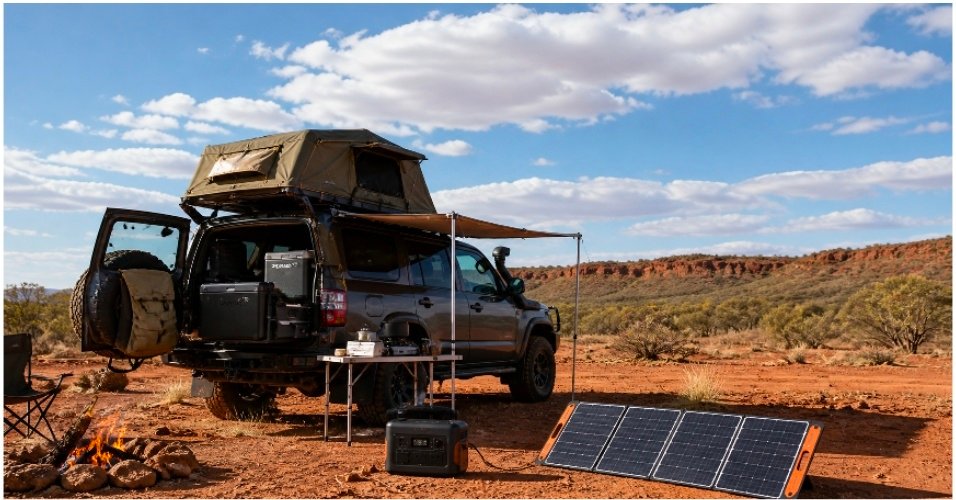
Not long ago, heading off-grid meant heavy gear, zero power, and zero help if things went wrong. But that’s changed and changed fast. Modern gear is making off-grid travel easier by fixing the biggest problems: keeping you powered up, connected, safe, and comfortable, no matter how far out you go. Lightweight solar panels charge your gear while the sun does the work. Satellite communicators like the Garmin inReach mean you’re never truly out of reach.
In fact, Tourism Research Australia recorded over 15 million caravan and camping trips in 2024, and it’s easy to see why. Today’s kit makes the bush feel a lot less daunting, whether you’re a first-timer or a seasoned traveller. You don’t need to be a survival expert anymore. You just need the right gear, and that’s exactly what this article covers.
Why Is Off-Grid Travel More Accessible Now Than It Was a Decade Ago?
Ten years ago, going off-grid was genuinely hard work. Gear was heavy, expensive, and built for serious expedition types. The average person simply didn’t have access to reliable equipment that could handle remote conditions without constant babysitting.
That’s shifted dramatically. Weight has dropped across almost every gear category. Solar panels, portable fridges, satellite communicators, and shelter systems are now lighter, smarter, and far more affordable than they used to be. The technology that once lived only in professional expedition kits is now sitting on shelves at your local outdoor retailer.
Setup times have also improved. What used to take an hour now takes fifteen minutes. That alone removes a massive barrier for new travellers. Manufacturing improvements and global supply chains have driven prices down without sacrificing durability. Entry-level gear today genuinely outperforms what mid-range gear offered a decade back. More Australians are heading bush because the gear finally meets them where they are, not where they wish they could be.
How Has Portable Power Changed the Off-Grid Game?
Power used to be the biggest limiting factor in remote travel. You either ran a loud, fuel-hungry generator or you went without. Neither option was great. Lithium battery technology changed everything. Modern portable power stations, like those from Jackery or EcoFlow, pack serious capacity into compact, manageable units.
A 1000Wh station can run a 12V fridge, charge devices, and power lighting for days when paired with a decent solar panel. Speaking of solar, folding panels have become genuinely efficient. A 200W folding panel setup can fully recharge a mid-sized battery station in five to six hours of solid sunlight. That’s a full reset every clear day, completely free.
Dual battery systems in vehicles have also matured. Running a secondary lithium auxiliary battery means your fridge keeps running overnight without touching your starter battery. The whole power ecosystem now works together cleanly. You plan your consumption, match it to your charging capacity, and head out knowing you’re covered. Power anxiety used to cut trips short. Now it rarely comes up.
What Navigation and Communication Gear Keeps You Safe in Remote Areas in Australia?
Australia’s remote areas are genuinely unforgiving. Mistakes that would be minor inconveniences closer to town can become life-threatening when you’re hours from help. Proper navigation and communication gear isn’t optional out here.
It’s a core part of your safety plan. GPS units like the Garmin GPSMAP 66i or the inReach Mini 2 give you accurate positioning and two-way satellite messaging anywhere on the planet. That last part matters. Two-way messaging means someone can actually respond to you, not just receive a distress signal.
For navigation, dedicated GPS devices outperform phone-based apps in heat, dust, and low battery situations. Apps like Hema Explorer are excellent for route planning but work best as a complement to a dedicated unit, not a replacement.
A UHF CB radio is still essential for communicating with other travellers on shared tracks. On busy outback routes, it can prevent serious accidents at creek crossings and single-lane sections. Always file a trip plan with someone reliable before heading out. Technology helps, but human backup remains the most dependable safety net.
How Are Modern Shelter and Sleep Systems Redefining Comfort Off the Grid?
Ground tents have improved, but rooftop tents have genuinely redefined what comfort looks like off-grid. Sleeping elevated keeps you away from ground moisture, insects, uneven terrain, and cold radiating up from the earth. Setup is faster, too.
Most hardshell rooftop tents deploy in under two minutes. That matters after a long drive day. Brands like Rigdup Australia, iKamper, CVT, and James Baroud have built strong reputations for quality hardshell designs.
The annex systems that pair with rooftop tents have also improved significantly. A quality annex effectively doubles your living space and creates a sheltered area for cooking, gear storage, and changing. Mattress quality inside modern rooftop tents has come a long way too. High-density foam that doesn’t compress over time means you’re actually sleeping well, not just surviving the night. Good sleep in the field changes your whole trip experience.
What Water and Food Tech Has Made Self-Sufficiency Simpler?
Water security used to mean carrying every litre you’d need. That was heavy and limiting. Modern filtration systems have removed that constraint almost entirely. Units like the Katadyn Hiker Pro or the LifeStraw Mission can turn questionable bore water or creek water into safe drinking water quickly and reliably.
For longer setups, a 12V pressure pump connected to a collapsible tank creates a proper running water system at camp. It sounds like a luxury until you’ve used one. Food storage has transformed too. Compressor-driven 12V fridges from brands like Dometic and ARB hold temperature accurately regardless of ambient heat.
A quality compressor fridge at 35 degrees Celsius outside draws surprisingly little power and keeps food genuinely cold, not just cool. Solar cookers and portable two-burner setups running on swap-and-go LPG have made cooking off-grid practical rather than compromised. You’re not eating rehydrated meals every night anymore. With the right setup, you’re cooking proper food, washing up with running water, and managing your supplies across weeks rather than days.
How Does Connectivity Gear Let You Stay Linked Without Sacrificing Remoteness?
There’s a real tension in off-grid travel between wanting to disconnect and needing to stay reachable. Modern connectivity gear actually resolves that tension better than most people expect. Starlink’s portable unit has been a genuine turning point. It delivers real broadband internet via satellite almost anywhere in Australia with an open sky view.
That means remote workers can genuinely operate from a bush campsite. It draws reasonable power and sets up in minutes. For those who don’t need full internet but want reliable communication, mobile signal boosters from brands like WeBoost significantly extend the range of your existing mobile coverage. Paired with a good external antenna mounted on the vehicle, you’ll often get a usable signal well beyond where your phone would otherwise give up. Satellite messengers with two-way capability bridge the gap further.
Even without any mobile network, you can send and receive messages and share your GPS location with family or colleagues. The key insight is that connectivity now exists on a spectrum. You choose how connected you want to be and build your kit around that. Full isolation is still an option. But it’s now a choice, not a default.
Is Modern Off-Grid Gear Actually Worth the Investment?
The upfront cost of a proper off-grid setup genuinely stops people. A rooftop tent, portable power station, 12V fridge, and communication gear can easily add up to several thousand dollars. That number looks confronting until you run it against what you’re actually replacing. Consider accommodation costs for extended travel.
A week in regional motels or holiday parks adds up fast. A solid off-grid kit pays itself off across a handful of trips when you factor that in, honestly. Durability also matters here. Quality gear built for Australian conditions lasts years, sometimes decades. A cheap setup that fails on its third trip isn’t a saving. It’s an expensive lesson.
There’s also a capability argument. Good gear doesn’t just make trips more comfortable. It makes trips possible that simply weren’t before. You access places that don’t have powered sites, phone coverage, or nearby towns. That freedom has genuine value that’s hard to put a price on. My honest view is that buying quality once beats repeatedly replacing budget gear. Prioritise the items that directly affect safety and sleep first. Build from there.
What Should You Prioritise When Building Your Off-Grid Kit From Scratch?
Starting from zero feels overwhelming because the gear list seems endless. The practical approach is to build in layers, starting with what keeps you safe and functional, then adding comfort later. Layer one is safety and communication.
A satellite communicator, a quality first aid kit, and a reliable recovery kit appropriate for your terrain. Without these, nothing else matters. Layer two is sleep and shelter. A rooftop tent or quality ground tent with a proper sleeping system suited to the temperatures you’ll face. Bad sleep destroys trips faster than almost anything else.
Layer three is power and refrigeration. A lithium battery setup with solar charging and a 12V compressor fridge. This combination gives you food security and device power across extended periods. Layer four is water. A filtration system and adequate storage capacity for your planned locations. Layer five is connectivity and navigation.
Dedicated GPS unit, UHF radio, and whatever level of connectivity suits your travel style. Resist buying everything at once. Take your initial setup on shorter trips. Identify what’s actually missing in real conditions. Then invest in targeted upgrades. Your kit will be far more relevant to how you actually travel.
Wrapping Up
Off-grid travel in Australia has genuinely changed. The barriers that kept people close to towns and powered sites have dropped significantly. Gear is lighter, smarter, more reliable, and more accessible than at any point before. What hasn’t changed is that preparation still matters.
The right gear used without understanding how it works together is still a liability. Take time to learn your setup before you rely on it in a remote location. Test your power system on the driveway. Run your fridge for a weekend before a two-week trip.
Practice your tent setup in daylight before you need to do it in the dark after a long drive. The Australians getting the most out of remote travel aren’t necessarily the ones with the most expensive kit.
They’re the ones who know their gear well and plan their trips honestly. Start with what you need, build as you learn, and don’t let the perfect setup stop you from getting out there with what you have right now. The bush rewards those who show up prepared, not those who wait until everything is perfect.
